

1. Pre-Practice Guidelines (The Preparation)
Before stepping onto the mat, your environment and internal state must be aligned.
- Saucha (Cleanliness): Ensure your practice space is airy, clean, and quiet. Physical hygiene is equally vital.
- Empty Stomach: Practice should ideally be performed on an empty stomach or at least 2–3 hours after a light meal.
- Comfortable Attire: Wear light, cotton clothing that allows for a full range of motion.
- Mental Readiness: Begin with a moment of silence or a prayer to transition from the chaos of daily life to a state of focus.
Pro Tip: Consistency is key. Try to practice at the same time every day (preferably Brahma Muhurta) to regulate your body’s biorhythms.
2. During Practice Guidelines (The Execution)
While performing Asanas and Pranayama, mindfulness is your best tool.
The Golden Rule: Sthira-Sukham
According to Patanjali, Sthira + Sukham = Asanam. This means every posture should be steady and comfortable.
- Breathe Naturally: Unless specified, always breathe through the nostrils. Never hold your breath (Kumbhaka) unless instructed by a certified teacher.
- Avoid Jerks: Movements should be slow, rhythmic, and graceful.
- Respect Your Limits: Never compete with others. Yoga is a journey inward, not a performance.
- Awareness: Keep your focus on the specific body part being stretched or the flow of your breath.
3. Post-Practice Guidelines (The Integration)
How you end your session determines how much “Prana” (energy) you retain.
- Shavasana (Relaxation): Always end with at least 5–10 minutes of deep relaxation to allow the body to neutralize.
- Avoid Immediate Baths: Wait at least 20–30 minutes after practice before bathing to let the body temperature stabilize.
- Gradual Food Intake: Wait 30 minutes before consuming food or water.
4. Ethical Foundations (Yamas & Niyamas)
The YCB syllabus emphasizes that a true yogi follows the “Ten Commandments” of Yoga:
| Category | Principle | Meaning for the Modern Yogi |
| Yama | Ahimsa | Non-violence in thought and action. |
| Yama | Satya | Truthfulness to oneself and others. |
| Niyama | Santosha | Contentment with what you have. |
| Niyama | Tapas | Disciplined effort and persistence. |
5. Environmental & Spatial Preparation
The space where you practice acts as a container for your energy (Prana).
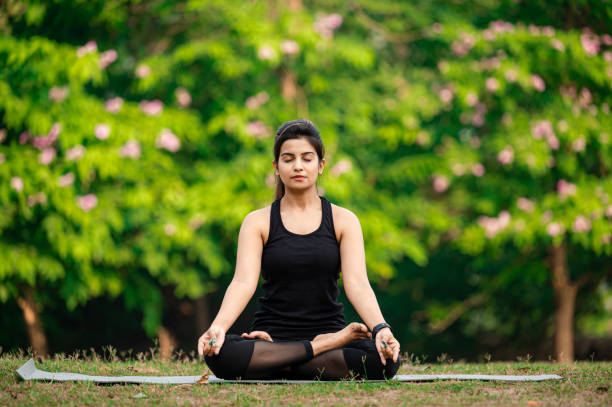
- Directional Alignment: Traditionally, practicing facing East (the rising sun) or North (magnetic pole) is recommended to align with natural energy flows.
- Surface Selection: Use a firm, non-slip yoga mat. Avoid practicing directly on the cold floor or a very soft mattress, as it can de-stabilize your joints.
- Aromatherapy & Sound: While a quiet environment is best, subtle use of Sattvic scents like sandalwood or incense can help in sensory withdrawal (Pratyahara).
6. Physical & Physiological Readiness
Before starting your Online Yoga class, ensure your body is “Yoga-ready” to prevent injury.
- Bladder and Bowel: Always ensure your bowels and bladder are empty. This is crucial for Uddiyana Bandha and deep abdominal twists.
- Hydration Strategy: Drink warm water 30 minutes before class to flush toxins, but avoid sipping water during the session unless it is an intense power flow, as it dampens the “digestive fire” (Agni) generated by the practice.
- Injury Disclosure: If joining our sessions from Dharmapuri or online, always inform the instructor about recent surgeries, high blood pressure, or spinal issues.
7. The Concept of “Sukshma Vyayama” (Warm-ups)
YCB guidelines emphasize that one should never jump directly into complex Asanas.
- Joint Loosening: Start with Griva Shakti Vikasaka (neck movements), Skandha Chakra (shoulder rotations), and ankle rotations.
- The Purpose: These movements increase the secretion of synovial fluid in the joints, making the body “plastic” and ready for deeper stretches.
8. Mental Attitude & Bhavana
Yoga is 90% mental and 10% physical. Your “Bhavana” (attitude) determines your progress.
- Patience (Dhairyat): Progress in Yoga is slow. Avoid the urge to master a pose in a single day.
- Cheerfulness (Utsahat): Practice with a smile. Tension in the face often leads to tension in the nervous system.
- Non-Competition: In our Online Yoga class, your only competition is who you were yesterday on the mat.
9. Post-Class “Dos and Don’ts”
To seal the benefits of your hard work at Krish Yoga Vidhayaalaya:
| Action | Why it Matters |
| Silent Reflection | Stay in a meditative state for 2 minutes after Shavasana to internalize peace. |
| Avoid Caffeine | Don’t rush for coffee immediately; it overstimulates the nervous system you just calmed. |
| Sattvic Diet | Follow your practice with fresh fruits or sprouts to nourish the body. |
Why Choose Krish Yoga Vidhayaalaya?
Located in Dharmapuri, our institute is dedicated to authentic teaching. We understand that not everyone can travel, which is why our Online Yoga class is designed to bring the studio experience to your home, ensuring you follow these guidelines under expert supervision.
Ready to start your journey?
Whether you are attending our physical centre in Dharmapuri or logging in for an Online Yoga class, following these detailed guidelines ensures you are practicing “Yoga,” not just “Exercise.”
🌿 Admissions Open – YCB Level Yoga Teacher and Evaluator Coaching Classes 🌿
Want to teach yoga professionally or open your own centre?
Here’s your chance to become a Govt. Certified Yoga Instructor under the Yoga Certification Board (YCB), Ministry of AYUSH, Govt. of India.
📌 Course Details:
⏰ Time: 8:00 – 9:00 PM
💻 Online Mode (Zoom – Live Theory & Practical)
✨ Benefits:
✅ Employment eligibility in schools & colleges 🏫
✅ Opportunities in India & abroad 🌍
✅ Learn with expert faculty 👩🏫
✅ Organized study materials & mock tests 📘
✅ Govt. recognized certificate 🎓
📞 Contact: 8110068073 / 9543179499
📲 Limited seats – Apply Now!
📥 Register Now:
👉 https://forms.gle/qWZmnDejHyNCXNfK7
🚀 Step into a successful career in yoga with Krish Yoga Vidhyaalaya (Associate Centre of IYA).
